

THE FUTURE
Preparing Pupils for an AI-Driven World
Artificial Intelligence is rapidly becoming part of everyday life — from the apps we use to the technology shaping future careers. Schools are increasingly exploring ways to help pupils understand how intelligent systems work, how machines learn from data, and how technology can be used responsibly. Through hands-on robotics and practical activities, pupils can explore AI concepts in a fun and accessible way while developing curiosity, problem-solving skills and confidence with technology.
More than just a robot
AI Learning Robots for Schools
AI learning robots allow pupils to experiment with artificial intelligence in a hands-on way. Instead of simply talking about how machines work, pupils can train a robot themselves and see how its behaviour changes depending on the data it receives.
By experimenting, testing and refining their ideas, pupils quickly discover important concepts such as:
- How machines learn from data
- Why mistakes help improve learning
- How decisions are made by intelligent systems
- Why bias can occur when training AI models
These activities introduce complex ideas in a way that is visual, practical and engaging for young learners.
Key Stage 2
Designed for Primary and Secondary Schools
The activities are suitable for pupils aged 8 and above, making them ideal for Key Stage 2 computing lessons, STEM enrichment days, or technology workshops.
No prior experience with robotics or artificial intelligence is required, making it accessible for both teachers and pupils.
The concepts can also be extended for older pupils by exploring more advanced ideas such as:
- Artificial neural networks
- supervised learning
- reinforcement learning
- training data and AI bias
Because the software is easy to learn, pupils can begin exploring these ideas even before they are ready for block-based programming.
Activity Example
Autonomous Robot Race
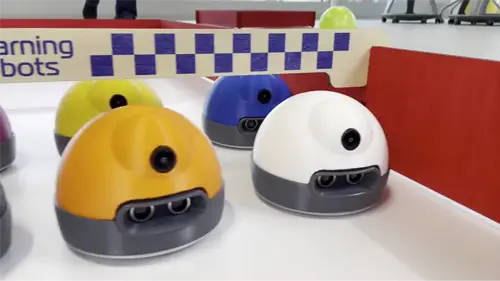
One of the most engaging activities is the Autonomous Robot Race, where pupils train a robot to navigate a course.
During the activity pupils learn how:
- robots collect information using sensors
- training data influences behaviour
- machines improve through repeated testing
- artificial intelligence models are trained
The challenge can last anywhere from 15 minutes to two hours, making it perfect for classroom demonstrations, computing lessons or STEM workshops.
Autonomy
Understanding AI Through Exploration
A series of structured activities can also introduce pupils to the four levels of AI autonomy, helping them understand the difference between traditional programming and machine learning.
Through practical experiments pupils discover that:
- programming tells a robot exactly what to do
- artificial intelligence allows a robot to learn from experience
- training data shapes how an AI behaves
- different learning strategies lead to different results
These discoveries help pupils build a clear understanding of how intelligent systems operate in the real world.
Curious Minds
Learning Through Curiosity and Experimentation
One of the most powerful aspects of AI learning robots is how they encourage pupils to reflect on their own learning.
When pupils train the robot, they quickly realise that:
- mistakes are part of learning
- experimentation leads to improvement
- curiosity leads to better solutions
- perseverance helps overcome challenges
These ideas connect strongly with problem solving, resilience and independent learning, all important skills across the wider curriculum.
Outcomes
What Pupils Learn During an AI Robotics Workshop
During an AI robotics workshop, pupils explore the principles behind artificial intelligence through practical challenges and experimentation. Rather than simply observing technology, they actively train and test a robot, discovering how intelligent systems learn from data and experience.
Through hands-on activities pupils learn:
- how robots use sensors to understand their environment
- how training data influences behaviour
- the difference between traditional programming and machine learning
- how AI systems improve through trial and error
- why bias can occur when training artificial intelligence
By seeing how the robot responds to their decisions, pupils quickly grasp ideas that might otherwise seem complex or abstract. The activities encourage curiosity, problem-solving and teamwork, making them ideal for computing lessons or STEM enrichment activities.
National Curriculum
Supporting the UK Computing Curriculum
AI learning robots provide an engaging way to support key elements of the Computing National Curriculum while introducing pupils to emerging technologies.
Activities link naturally to areas such as:
Algorithms and Programming: Pupils explore how instructions control behaviour and how machine learning differs from traditional programming.
Understanding Data Training the robot demonstrates how data influences the decisions made by intelligent systems.
Problem Solving and Logical Thinking Pupils experiment with different strategies to improve the robot’s performance and solve challenges.
Digital Literacy and Technology Awareness Activities help pupils understand the role of intelligent technology in the modern world and encourage responsible use of digital tools.
By combining robotics with artificial intelligence, pupils gain a practical understanding of the technology shaping the future while developing important computational thinking skills.
Delivery
Designed to Be Easy for Teachers to Deliver
The Learning Robots system has been designed so that teachers can confidently run activities without needing specialist AI knowledge. The software includes structured activities, lesson ideas and clear guidance that help pupils explore artificial intelligence step-by-step..
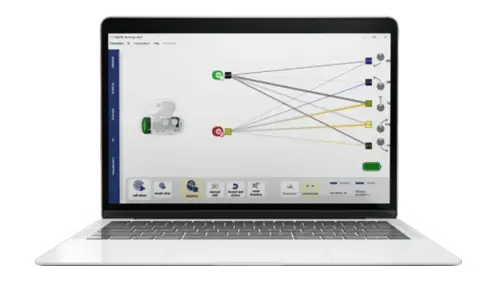
Teachers can choose from short activities, classroom demonstrations or longer workshop-style sessions depending on the time available. The software guides pupils through the process of training the robot and experimenting with different strategies, allowing teachers to focus on facilitating discussion and exploration.
This makes the system ideal for computing lessons, STEM enrichment days and technology themed activities.
The Learning Robots software platform also provides structured lesson ideas, activity guides and classroom resources, helping teachers introduce AI concepts with confidence.
View Lesson Plans and Teaching Resources (Learning Robots Website)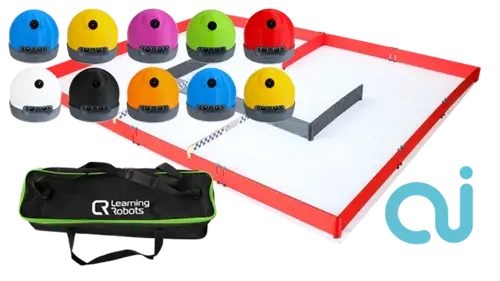
Frequently Asked Questions:
Q: What age are AI learning robots suitable for?
A: AI learning robots are suitable for pupils aged 8 and above and can be used in Key Stage 2 computing lessons or STEM enrichment activities.
Q: Do teachers need experience with AI or robotics?
A: No prior experience is required. The software and resources guide teachers and pupils through the activities step-by-step.
Q: Can schools book run their own AI robotics workshop?
A: Yes. Schools can follow provided resources where pupils train robots and explore how artificial intelligence works in a practical and engaging way.
Q: Is it available accross the UK?
A: Yes, we supply all of the UK